
Different Learning Styles in Home Education
Quick Answer
Children learn in different ways, and home education allows families to adapt learning to suit these individual preferences. This can support both understanding and engagement.
Introduction
One of the advantages of home education is the ability to respond to how a child learns best.
Children often have different learning preferences, and adapting to these can make learning more effective and enjoyable.
This page explains how learning styles can be approached in home education.
Common Learning Preferences
Children may prefer different ways of learning.
In education we often refer to 7 types of learning:
Visual or Spatial learning: This means you need to see something to process it – for example diagrams and charts.
Auditory or Aural-Musical: This means that the learner learns best by listening. For example music, a teacher talking or a group discussion.
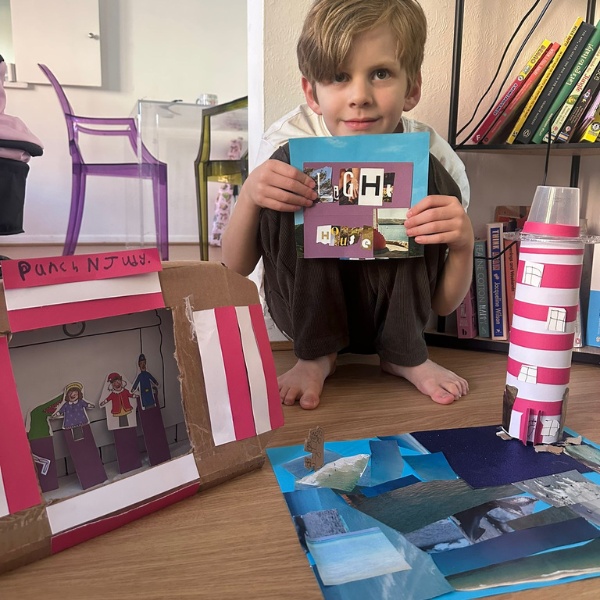
Kinesthetic or Physical: The learner learns by moving or doing. The learner needs to move around or move parts of their body or have a hands-on experience to learn effectively. Creating something with your hands is a kinesthetic experience.
Logical or Mathematical: Learners that understand through logic, patterns or systems. Logical or Mathematical learners excel when using logic, reasoning, and systems.
Verbal or Linguistic: Learners who need to speak or write in order to process what they are learning.
Social or Interpersonal: Learners that thrive when learning in groups and love to communicate and interact as they learn.
Solitary or intrapersonal: These learners like to work alone and are great at independent research and tend to love a quiet learning environment.
Most children use a combination of these (this is referred to sometimes as being multimodal), but many children will favour one or two styles of learning. New styles of learning can develop over time. It isn’t a good idea to “pigeon hole” a child into into one learning style and let that dictate their learning experiences, but it can be fun to have an awareness. You can explore your own learning style using this little quiz created by Arden University.
Adapting Learning Approaches
Home education allows families to adapt learning by:
– choosing suitable resources
– varying activities
– adjusting teaching methods
This can help make learning more accessible. Making learning accessible is important. The best delivery of content in the world will not reach a child who cannot access the learning, so starting from the point of how does my child best learn, can make a powerful difference. You may wish to explore our Learning Pathways to find out how Learn Laugh Play can support your child with their individual needs, interests and styles of learning.
Using a Range of Methods
Rather than focusing on one style, many families use a mix of approaches.
A few examples of this would be:
– combining reading with discussion
– using practical activities alongside written work
– exploring topics in different ways
– finding out over time which learning styles your child enjoys the most and “leaning in” to those
– listening to music while making something
– studying for an exam in a group environment
Supporting Engagement
Adapting to how a child learns can:
– increase engagement
– improve confidence
– make learning more effective
It can also help children feel more comfortable with learning. It also means that as you find out more about how your child learns, you will likely see that learning becomes a more positive and productive process. The goal here is for your child to enjoy learning because it feels safe and natural and interesting!
Conclusion
Understanding and adapting to learning styles can support a more personalised approach to home education.
By using a range of methods and adjusting over time, families can create an environment that supports both learning and builds confidence.
You can explore more guidance throughout this section as you develop an approach that works for your child and your family.